Your Cart is Empty


You're building an outdoor space you'll actually want to spend time in — and you've narrowed it down to two options: a fire pit or a fire table. Both create warmth and atmosphere. But they're designed for very different lifestyles, and choosing the wrong one means settling for something that doesn't quite fit the space you had in mind.
A fire pit is an open, bowl-style fire feature designed primarily for heat and ambiance. A fire table is a furniture-style piece with a flat surface surrounding a central burner — it functions as both a fire feature and a table. The right choice between a fire pit vs. fire table depends on how you use your outdoor space, your priorities between warmth and usability, and the surface you're building on.
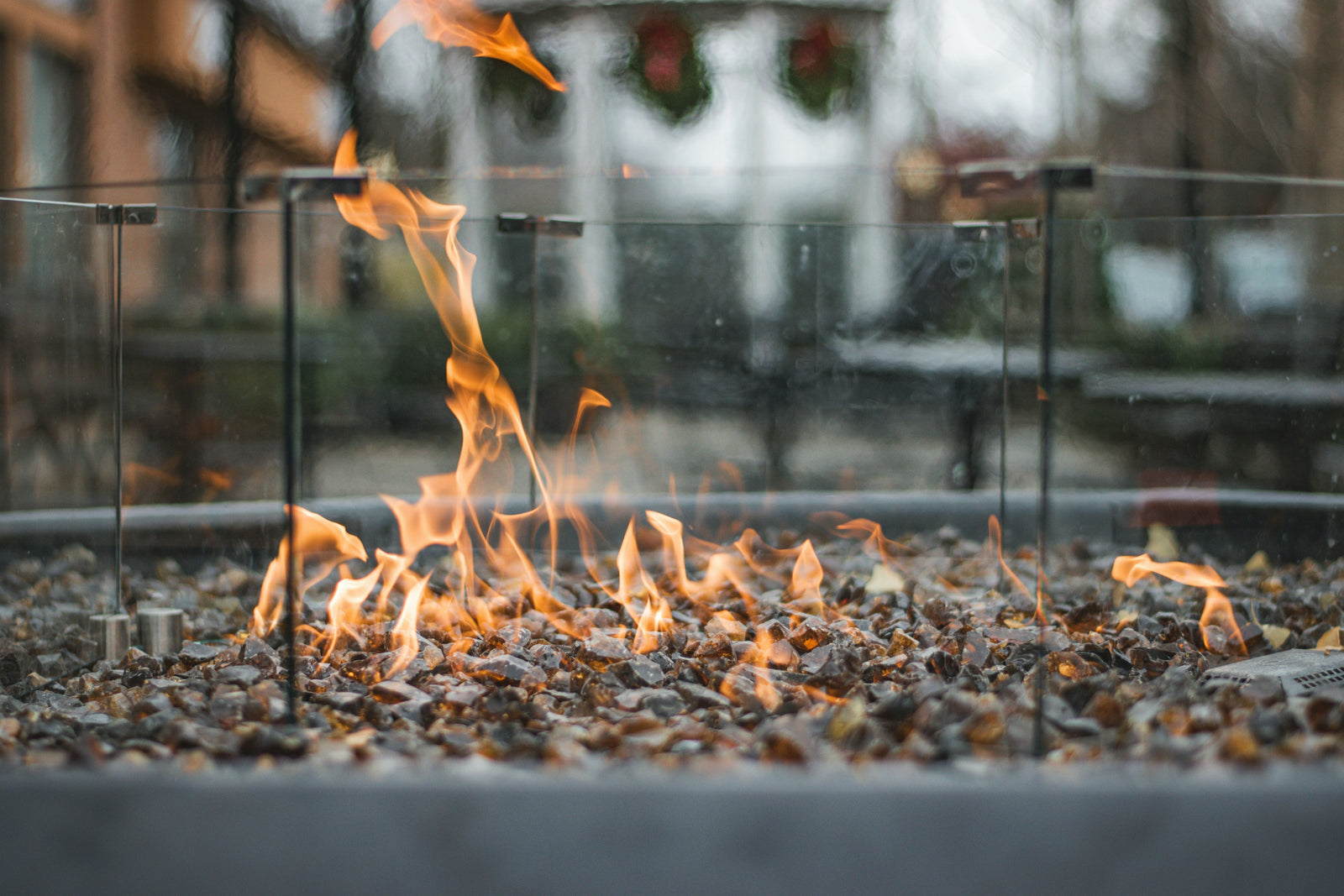
A fire pit is the more traditional of the two. It's a contained fire feature — typically a round or square bowl — that sits close to the ground and produces an open flame. Most are freestanding and don't require permanent installation.
Fire pits run on wood or gas (propane or natural gas). Wood-burning versions deliver the crackling, open-flame experience most people picture when they imagine gathering around a fire. Gas-powered fire pits offer the same ambiance with easier ignition, no ash cleanup, and adjustable flame height.
They're built to be the focal point of an outdoor space — not a surface to set things on. The experience is gathered around the fire, not at it. And because most fire pits don't require a permanent gas line or fixed installation, they're more flexible in terms of placement and reconfiguration.
A fire table combines the warmth of a fire feature with the functionality of outdoor furniture. The burner sits recessed in the center of the table, surrounded by a flat surface — typically concrete, powder-coated steel, or stone — that guests can set drinks, plates, or candles on.
Most fire tables run on propane or natural gas with electronic or match-lit ignition. The flame height is adjustable, and when the fire isn't lit, the burner is covered by a lid — leaving a clean, functional outdoor table. This dual-purpose design is what sets fire tables apart: they earn their footprint in a way a standalone fire pit doesn't.
They tend to sit at bar or dining height, which changes how people interact with them. Instead of leaning forward toward a ground-level flame, guests sit upright — conversation flows across the table, not just around a bowl. If you're working with a curated outdoor space where every piece needs to pull its weight, a fire table does.

Powder coat steel · 4 sizes · 5 ignition options · 7 color finishes
From $3,284 View product →Fire pits have a raw, grounded quality — they feel elemental and informal. Whether you choose a sleek powder-coated steel bowl or a cast concrete surround, the fire pit reads as a fire feature first. Everything else is secondary.
Fire tables read as furniture first, fire second. The burner disappears into the design until it's lit. If your outdoor space trends toward modern, minimalist, or carefully composed — a fire table integrates more seamlessly into that aesthetic than a bowl of fire ever will.
Fire pits generally produce more radiant heat, especially wood-burning models. The open flame radiates in all directions at ground level, which works well on cool evenings when you want warmth you can feel from several feet away.
Fire tables produce a more concentrated, ambient flame. The heat warms those seated immediately around it — enough to extend an evening comfortably, but not so intense that guests have to step back. If staying warm is the primary reason you want a fire feature, a fire pit wins on output. If warmth is the backdrop to a meal or gathering, a fire table delivers exactly enough.
A fire pit offers no surface area. It's a bowl of fire surrounded by seating — you need side tables or a separate surface for anything you want to set down. That's fine if the fire is the point. It becomes limiting if you're trying to host.
A fire table gives you functional surface area around the burner. Guests set drinks down without thinking about it. The table handles what a table should handle — and happens to have a fire in the center of it.
Neither option is inherently unsafe when used correctly, but they require different considerations. Wood-burning fire pits produce sparks and embers — which matters if you're placing them near a wood deck, cushioned furniture, or overhead structures. Gas fire pits reduce that risk significantly: no sparks, no embers, adjustable flame.
Fire tables have the cleanest safety profile of any fire feature in this category. The flame is enclosed within the burner housing with no open sparks, and most are rated for use on wood decks. If you have children, pets, or a composite or wood deck, a propane or natural gas fire table is worth considering for this reason alone.
The answer depends on how you actually use your outdoor space — not just how you imagine using it. A fire pit and a fire table serve different moments, and the right choice becomes clear when you're honest about what kind of evenings you're building toward.
A fire table wins here. When people are seated around a table eating and talking, a central fire feature that doesn't interrupt conversation — and gives everyone somewhere to set a drink — is exactly right. The fire table functions as the dining surface; the fire is just running in the middle of it.
If you host regularly and want your outdoor space to feel intentional, a fire table pulls the space together in a way a separate fire pit can't.
A fire pit is the better choice if your priority is heat output and a more immersive fire experience. Gathered seating, an open flame, and the crackle of a real fire — a traditional fire pit creates an atmosphere that a gas fire table can't fully replicate.
The Outdoor Plus Unity Round Fire Pit and the Del Mar Concrete Fire Pit are built for exactly this — large open burners designed to anchor a seating area.
If you're working with a wood deck, a covered pergola, or any enclosed outdoor space, fuel type and clearance requirements become critical. Wood-burning fire pits are rarely appropriate for deck use. Gas fire pits require adequate clearance from overhead structures.
A propane or natural gas fire table with a verified low-clearance rating is typically the safest and most practical choice for these situations. Always check the manufacturer's specifications for your specific model before installing.
Wood-burning pits deliver the most authentic fire experience — the crackle, the smell, the unpredictability of a live flame. They don't require a gas line or propane tank, which keeps placement flexible. The tradeoff is maintenance: you're managing fuel, ash, and smoke. Some municipalities also restrict outdoor wood burning, so it's worth checking local regulations before committing.
Gas-powered fire features dominate the premium outdoor living market for good reason. Propane is portable — you connect a tank and you're done. Natural gas connects to a permanent line, which eliminates refill logistics entirely. Both offer electronic or match-lit ignition, adjustable flame height, and a clean burn with no ash or debris. For anyone who wants the experience of fire without the upkeep, gas is the practical choice — and it's what powers every fire table we carry.
Entry-level fire pits start under $500. At the premium end — powder-coated steel and concrete, with gas burners and multiple ignition options — expect $2,000 to $4,500+, depending on size and configuration.
Fire tables generally start higher. The combination of furniture-grade construction and integrated burner engineering adds cost. Well-built fire tables in premium materials typically range from $2,500 to $5,500+.
Maintenance differences are mostly about fuel type, not format. Gas models require minimal upkeep — occasional burner cleaning, a cover when not in use, and an annual check of connections and fittings. A quality cover is worth the investment for either format: it protects the finish, prevents water from pooling in the burner, and extends the life of the piece significantly.
If you're still deciding between a fire pit and a fire table, these pieces represent both categories at the level we'd recommend for a serious outdoor space.
For the fire pit experience — open flame, substantial presence, and the kind of build quality that holds up for years:

Powder coat steel · Round design · Multiple sizes & 7 color finishes
From $3,504 View product →The right fire feature is the one that fits the outdoor space you're actually building — not a hypothetical one. A fire table makes sense when the space is designed for entertaining and the aesthetic is intentional. A fire pit makes sense when warmth, atmosphere, and flexibility come first.
Either way, it's an investment worth making once. If you know what kind of evenings you're designing for, the choice usually becomes clear. Browse our full collection of fire tables and fire pits from The Outdoor Plus — or reach out if you'd like help choosing the right fit for your space.